
For play, check movement at the garment rather than the label
Everyday and play clothing needs room for sitting, climbing and bending. Stretch can come from fibre content, knitted construction or a combination of the two, so the word “flexible” is not enough on its own. Check the composition, feel the fabric when buying in person, and look at the shape of the knees, seat, shoulders and armholes.
A soft fabric can still restrict movement if the cut is narrow. Conversely, a woven trouser can work well when it has an appropriate rise, enough seat room and an adjustable waist. The practical question is whether the garment moves with the child during its intended use.
For school, examine repeat washing and small points of failure
School clothes are worn and washed frequently. Inspect seams, rib cuffs, zip attachment, button security and the way a print has been applied. Ask for the care instructions before treating a dark colour, brushed surface or printed front as easy-care.
A coordinated school range also needs replacement logic. Neutral trousers, leggings, shirts and sweatshirts can be replenished or combined more easily than a highly specific set. That does not make basics automatically better; it gives them a different stock role.
For special occasions, inspect the inside
An occasion dress or children's suit is judged from the outside, but comfort problems often begin inside. Check whether the lining covers rough seams, whether embellishments have a backing, and whether the child can sit and raise their arms without the neckline or armholes pulling.
Decorative metal parts are not automatically unsafe. The concern is a sharp edge, insecure attachment, unsuitable placement or a component small enough to become a hazard for the intended age. Ask how trims are attached and include them in the physical inspection.
Treat long cords and unsecured drawstrings as a specific hazard
Loose cords can catch on surrounding objects. The US Consumer Product Safety Commission publishes requirements for drawstrings in children's upper outerwear, and a UK product recall for a child's playsuit identified an unsecured, overlong waist drawstring as a strangulation risk. Those examples concern defined products and markets, but they show why cord length, position and attachment belong on a buying checklist.
Destination rules matter. A supplier's statement that a garment is suitable for sale does not replace the importer or retailer's responsibility to check the rules that apply where the product will be sold.
- Look for cords around the hood, neck and waist and check where their ends sit.
- Pull lightly on buttons, badges, bows and decorative stones to identify loose attachment.
- Run a hand over zips, snaps and metal trims to find sharp edges or exposed backs.
- Match the inspection to the intended age; baby clothing needs particular attention to detachable small parts.
Allow for growth without buying a poor fit
Growth allowance should preserve movement and safety. Buying one size larger without checking the garment can create sleeves that cover the hands, a waist that slips or trousers that drag under the heel. Compare the child's current height and body measurements with the supplier chart, then consider how much room the cut already contains.
For wholesale planning, keep adjacent sizes in the assortment when demand supports them. That gives the customer a fit choice without requiring every garment to be worn oversized.
Fit advice is general. The actual product measurements, intended age and destination-market safety requirements take precedence.
Translate intended use into a product specification
Write a short specification before comparing models. For playwear it might require unrestricted arm and knee movement, an elasticated waist, washable construction and no exposed decorative parts. For school it may emphasize repeat washing, replaceable separates and colours that coordinate. For an occasion dress it may prioritize lining coverage, seated comfort and secure trim. Specific checks make the word “suitable” testable.
Use the same specification for every candidate in the category. If one model is chosen for a photograph while another is assessed for seam construction, the comparison is uneven. A written list also helps a showroom advisor reject unsuitable options early and present closer alternatives without relying on broad style descriptions.
Look at construction where movement creates stress
Shoulders, armholes, crotch seams, knees, pocket openings and zip bases experience repeated movement or pulling. Check whether the seam lies flat, whether the fabric has been caught cleanly and whether reinforcement creates a hard edge against the skin. Stretch fabric still needs compatible thread and seam construction; fibre elasticity cannot compensate for a failing stitch.
For sets, inspect both pieces independently. A comfortable sweatshirt does not make a restrictive trouser acceptable. Confirm whether the top and bottom are fixed to the same size or can be ordered separately. In wholesale series, a fixed set may create a fit compromise for children whose upper and lower body measurements sit in different bands.
Use a controlled wash check for repeat-wear products
When a product is important enough to order deeply, a sample wash following its care label can provide useful evidence. Measure key points before and after, photograph colour and print condition in similar light, and note drying method. One wash cannot predict a garment's full life, but it can reveal immediate twisting, colour transfer, surface change or dimensional movement that deserves a supplier question.
Do not test with a harsher cycle and present the result as normal performance. The purpose is to check the labelled treatment. Keep detergent, load and drying notes so a comparison between two models has context. If testing is impossible before ordering, avoid promising wash outcomes that have not been observed or documented.
Check closures for independence and comfort
Buttons, snaps, zips, hook-and-loop tape and elastic adjustments affect how easily a child or caregiver can use the garment. A school trouser may need a closure the intended age can manage. A back zip on occasionwear needs a guard or finish that does not rub. Check whether a decorative button is functional and whether its loss would make the garment unusable.
Apply gentle, appropriate handling rather than a destructive test in the showroom. Look for loose stitching, exposed staple-like parts, rough zip ends and elastic that twists inside its channel. Product-safety testing requires proper methods and destination rules; a buyer's inspection is an additional screen, not a certification.
Match thermal comfort to layers and setting
Fabric thickness alone does not determine comfort. Activity level, indoor heating, outer layers, wind and moisture all matter. For active play, a very warm brushed set can become uncomfortable indoors. For waiting outdoors, a light school layer may need compatible outerwear. Build combinations rather than asking one garment to cover every condition.
Ask for composition and construction and inspect whether the reverse is brushed, looped, lined or coated. Avoid assigning a precise temperature range without test evidence. Retail guidance can describe intended layering and observed fabric properties while leaving the final choice to local conditions and the child wearing it.
Verify labels and claims before creating sales copy
Retain photographs of fibre composition, care symbols, size and origin information for the exact model. Check that the online description matches those labels and any supplier documentation. Words such as organic, hypoallergenic, waterproof or certified require product-specific support; a similar garment or a general factory statement is not enough.
Destination markets can require particular textile, safety and importer information. Identify who is responsible for checking those requirements before the stock is offered for sale. A journal guide can point to common checks, but it cannot replace current legal advice, laboratory testing or the documentation required by the buyer's country.
Keep a use-based receiving checklist
When the order arrives, sample garments from the delivered cartons and compare them with the confirmed model. For play and school products, check seams, closures, labels and obvious measurement consistency. For occasionwear, inspect lining, embellishments and colour. Count the size assortment before separating pieces for photography or store distribution.
Record issues by product code and size rather than with a general statement about the shipment. If the same construction concern appears across several samples, isolate the relevant stock and contact the supplier. Clear records protect the customer and give the commercial conversation a specific basis.
Explain product suitability without absolute promises
Customer-facing copy should state the intended use and the features that support it. “Knitted trousers with an elasticated waist and room through the seat” is more useful than “perfect for every playground.” For school, describe care instructions and construction that have been verified. For occasionwear, describe lining, closures and fit guidance without promising all-day comfort for every child.
Include the limits that affect a decision: measurements vary by model, trims need age-appropriate inspection, and the care label controls treatment. Precise language does not weaken the product. It gives parents and retailers information they can compare and reduces the pressure to turn a general buying guide into a guarantee about an individual garment.
Worked example: compare one model for three different uses
Consider a knitted two-piece set with a brushed reverse, elastic waist, hood cord and decorative metal badge. For relaxed weekend wear, the movement and warmth may suit the intended customer after fit is checked. For an active indoor play setting, the brushed fabric may be warmer than needed. For school, the hood cord, wash routine and whether the badge withstands repeated use become specific questions rather than styling details.
The buyer checks the care label, cord construction, badge attachment, seams and size chart. The product is not described as universally suitable or unsafe from its category name. Instead, the observed features are compared with the use specification and destination rules. If the cord does not meet the applicable requirement, the issue must be resolved; it cannot be balanced out by good fabric or an attractive price.
An occasion version of the same silhouette might replace the brushed knit with a lined woven fabric and embellishment. Movement, seated comfort, lining coverage and trim security then control the decision. The example shows why a buyer should not create one generic quality score. A product can be well made for one purpose and still be the wrong choice for another setting or age group.
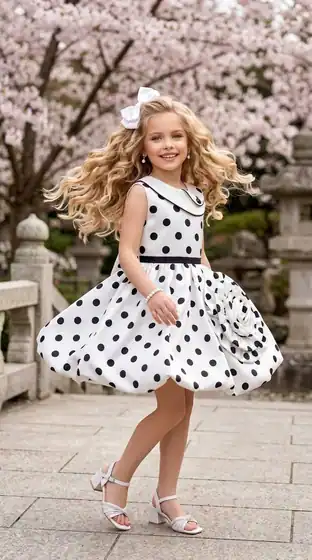
Product photographs cannot settle these questions. Styling can hide the inside finish, the range of movement and the scale of a cord or trim. Use images to identify the model and communicate colour or silhouette, then return to the written specification, physical inspection and product documents for the buying decision. If a feature has not been checked, leave it as an open question instead of inferring comfort or safety from the way the garment is presented.